Journal · Grooming · Sensitive skin
Natural dog shampoo for itchy, sensitive skin: what to look for (and avoid)
An itchy dog makes you want to buy the bottle with the most soothing words on it. The kindest choice is usually the most boring one: fragrance-free, short label, gentle cleaner — and a vet visit if the itch keeps winning.
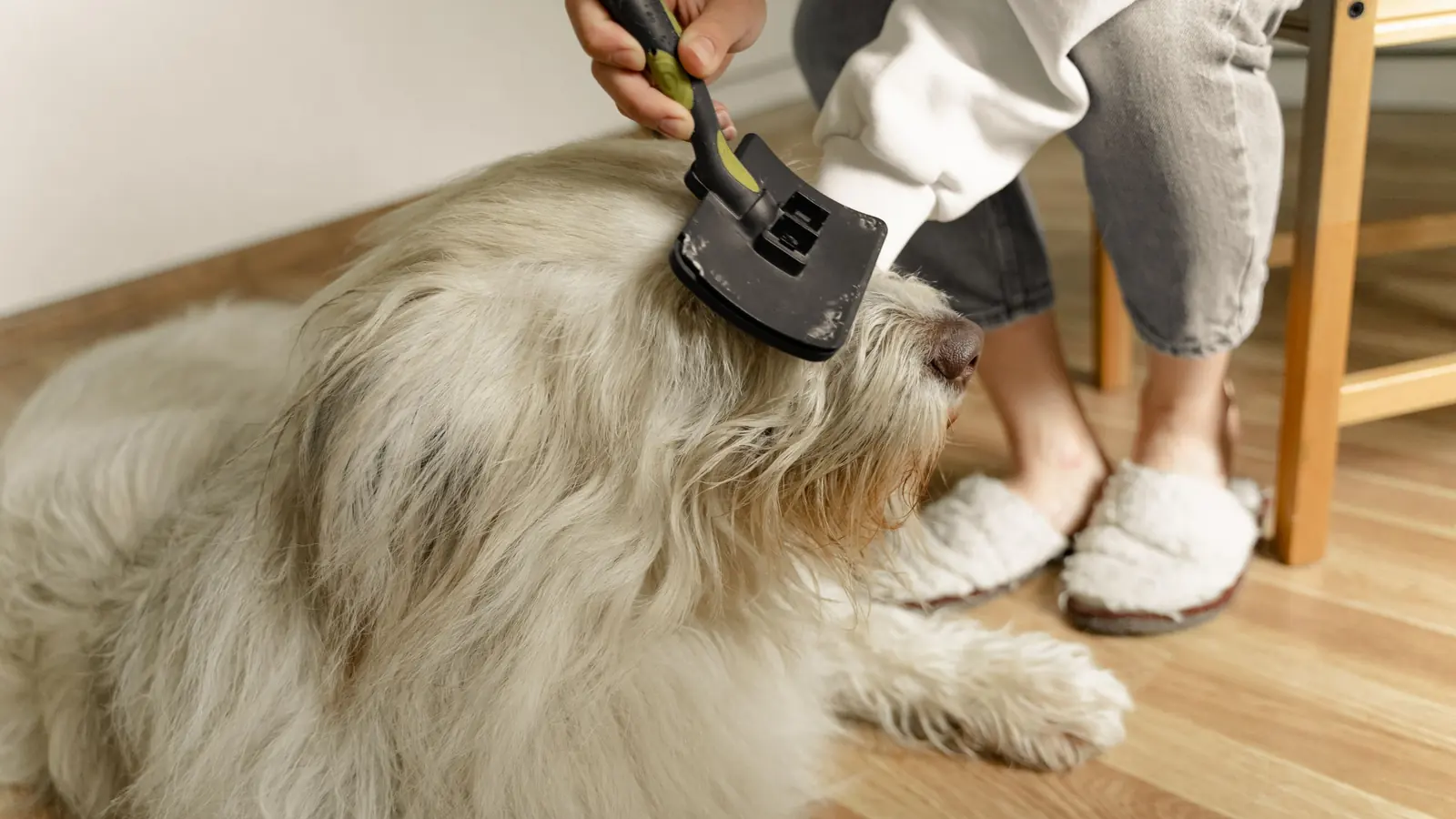
This is product education, not veterinary advice, and we have not run a shampoo trial on a panel of itchy dogs. What follows is how to read a label so “natural” works for your dog’s skin instead of against it. For the bigger picture — brushing first, fewer baths, lower-waste grooming — start with our natural dog grooming guide.
First: is this a shampoo problem at all?
Most persistent itch in dogs has a cause a bath cannot reach. Fleas, environmental allergies, food reactions, mites, yeast, and bacterial skin infections all show up as scratching, licking, and chewing. A gentle shampoo can make a dog more comfortable and wash off allergens and debris. It cannot kill a flea population in your carpet or clear an infection.
Book a vet visit instead of (or before) shopping if you see:
- Open sores, scabs, crusts, or a hot spot that spreads
- Hair loss, thickened or darkened skin, or red, greasy patches
- A strong yeasty or sour smell, especially in skin folds or ears
- Head shaking, ear scratching, or one smelly ear
- Constant paw licking or chewing at the same spot
- Itching that lasts more than a week or two, wakes the dog at night, or comes back after every bath
If your vet prescribes a medicated shampoo — for example one with chlorhexidine, miconazole, or ketoconazole — that is the shampoo. Use it on their schedule, including the contact time on the label, and do not swap in a “natural” product because it smells nicer.
Ingredients worth looking for
For mild dryness or occasional itch in an otherwise healthy dog, these are the ingredients that tend to show up in gentle formulas. None is magic; all of them are better than perfume.
| Ingredient | Why it is there | Caveat |
|---|---|---|
| Colloidal oatmeal (Avena sativa kernel flour) | Finely ground oats that leave a soothing, moisturizing film on skin | Skip if your dog has a known oat or grain sensitivity |
| Aloe vera (leaf juice) | Soothing and moisturizing in rinse-off products | Should be a rinse-off ingredient, not something the dog licks off in quantity |
| Gentle plant-derived surfactants (for example decyl glucoside, coco-glucoside, cocamidopropyl betaine) | They actually clean, with less stripping than harsh detergents | “Plant-derived” still means a processed cleaning agent — that is fine and expected |
| Glycerin, panthenol, ceramides | Humectants and barrier-support ingredients common in sensitive-skin formulas | Supportive, not a treatment for infection or allergy |
| A named preservative | Water-based products grow mold and bacteria without one | “Preservative-free” in a watery shampoo is a red flag, not a feature |
Coconut oil and other plant oils are popular in natural shampoos. They can make a coat feel softer, but they are not proven itch treatments, and on a dog with yeasty or greasy skin, more oil is not what the skin needs.
Ingredients to avoid on itchy skin
Essential oils — the big one
“Natural” fragrance is where natural shampoos most often go wrong. Veterinary poison-control resources repeatedly flag these oils as risky for dogs, particularly when concentrated or when a dog licks them off:
- Tea tree (melaleuca) — often marketed for itch; toxic to dogs at higher concentrations, and pet-poisoning cases commonly involve owners applying it to skin
- Pennyroyal
- Wintergreen and sweet birch
- Pine
- Cinnamon
- Citrus oils (including d-limonene)
- Peppermint
- Ylang-ylang
A rinse-off shampoo with a trace of oil is not the same exposure as a few drops of pure oil rubbed on a hot spot — but on broken, inflamed skin, you have no reason to add the risk. For a sensitive-skin dog, treat any featured essential oil as a reason to keep shopping. And never apply undiluted essential oils to a dog, ever. If you suspect a dog has licked or been exposed to a concentrated oil and is drooling, vomiting, wobbly, or weak, call your vet or a pet poison helpline right away.
Fragrance or “parfum”
One word on the label can hide dozens of scent chemicals. Fragrance is there for the human. For an itchy dog, choose fragrance-free (not just “unscented,” which can mean a masking fragrance was added).
Harsh detergents and long “active” lists
Strong sulfate cleaners can strip skin oils in some dogs, and every extra botanical is another thing a sensitive dog might react to. Shorter is easier to troubleshoot: if your dog reacts, you can actually tell what changed.
Human shampoo
Dog skin is generally less acidic than human skin, and dog formulas are designed around that. A bubbly, scented human shampoo is a common route to drier, itchier skin. Use a dog product.
How to read a “natural” shampoo label in 60 seconds
- Is it made for dogs? If not, put it back.
- Scan for fragrance and essential oils. “Fragrance,” “parfum,” tea tree, melaleuca, or a list of oils near the top means it is not the sensitive-skin pick.
- Find the cleaner. You should be able to name the surfactant. A label of only “botanical extracts” is not telling you what washes the dog.
- Find the preservative. Its presence is good news.
- Distrust medical words on a non-medicated bottle. “Heals,” “cures,” and “detox” are marketing. A shampoo that genuinely treats infection is a medicated product with a listed active ingredient and directions.
- Check the eco claims you can verify. “Biodegradable formula” refers to wastewater treatment. A recyclable bottle and a size you will finish do more for the planet than a leaf icon.
How to bathe an itchy dog without making it worse
- Brush first. Removing loose coat lets shampoo reach skin and stops mats from tightening. See the grooming guide for brush types.
- Lukewarm water. Hot water feels good to people and worsens itch for many dogs.
- Dilute and lather gently. Follow the label; massage, do not scrub.
- Rinse longer than you think. Leftover shampoo residue is itself an irritant. Rinse until the water runs clear and the coat squeaks a little.
- Dry thoroughly. Damp skin folds and thick undercoats are where yeast does well. Towel well; use a cool dryer setting if your dog tolerates it.
- Do not over-bathe. Without a vet plan, every few weeks is usually plenty. More baths can mean drier skin.
- Patch test a new product on a small area first if your dog has reacted before.
The lower-waste version
The greenest shampoo is the bottle you finish. Buy one fragrance-free shampoo in a size that matches how rarely you bathe, recycle the bottle if your city takes it, and let brushing do most of the work. A shelf of half-used “calming” washes is waste — and every new product is another variable on reactive skin. The Start here kit treats grooming the same way.
Common questions
What is the best natural shampoo for a dog with itchy skin?
Look for a short-ingredient, fragrance-free dog shampoo with a gentle surfactant and a soothing ingredient such as colloidal oatmeal or aloe. Skip formulas that feature essential oils, especially tea tree. If the itch keeps coming back, shampoo is treating a symptom — the cause (fleas, allergies, infection) needs a vet.
Is oatmeal shampoo good for dogs with itchy skin?
Colloidal oatmeal (finely ground oats) is a common, generally gentle soothing ingredient and a reasonable first choice for mild dryness or itch. It does not treat fleas, mites, yeast, or bacterial infections, and a dog with a known oat or grain sensitivity may not tolerate it.
Are essential oils safe in dog shampoo?
Not as a default. Veterinary poison resources flag tea tree (melaleuca), pennyroyal, wintergreen, pine, cinnamon, citrus, peppermint, sweet birch, and ylang-ylang oils as risky for dogs, especially concentrated or when licked. Itchy, broken skin may absorb more. For sensitive skin, choose a fragrance-free formula and ask your vet before using anything oil-scented.
Can I use human shampoo on my dog?
It is a poor choice for regular use. Dog skin is generally less acidic than human skin and dog-specific formulas are designed around that. Fragranced human products add irritants a sensitive dog does not need. A plain, fragrance-free dog shampoo is the safer default.
How often should I bathe a dog with itchy skin?
Without a vet plan, every few weeks is plenty for most dogs; over-bathing can dry skin further. Medicated regimens are different — vets sometimes prescribe frequent baths with a specific shampoo and contact time. Follow that plan exactly rather than improvising with a natural product in between.
When should I take my itchy dog to the vet?
Go in if you see open sores, scabs, hair loss, red or greasy patches, a strong yeasty smell, ear head-shaking, constant paw licking, or if the itching lasts more than a week or two, keeps the dog up at night, or returns after every bath. Those point to fleas, allergies, mites, or infection — not a shampoo problem.